Project note
Can You Spot It
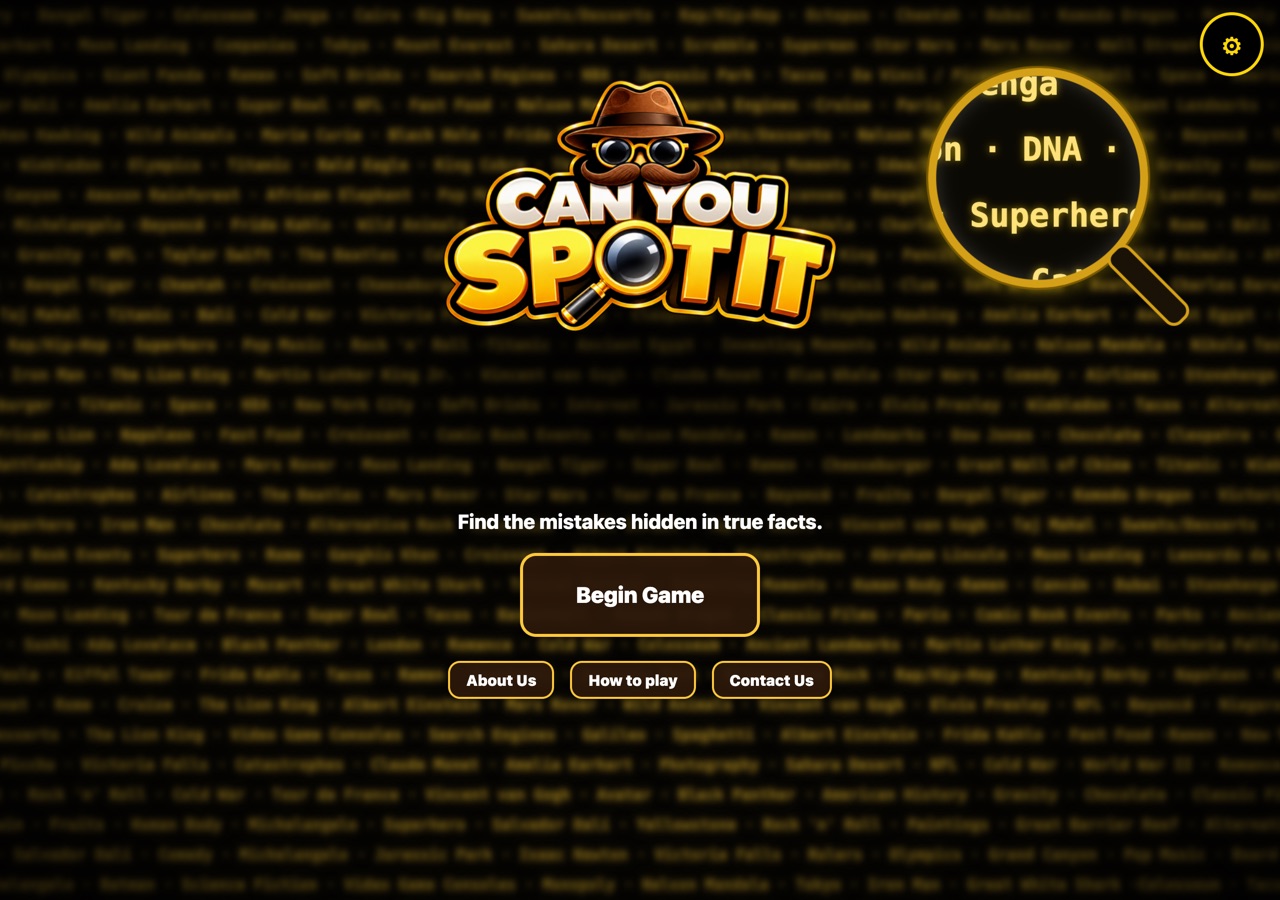
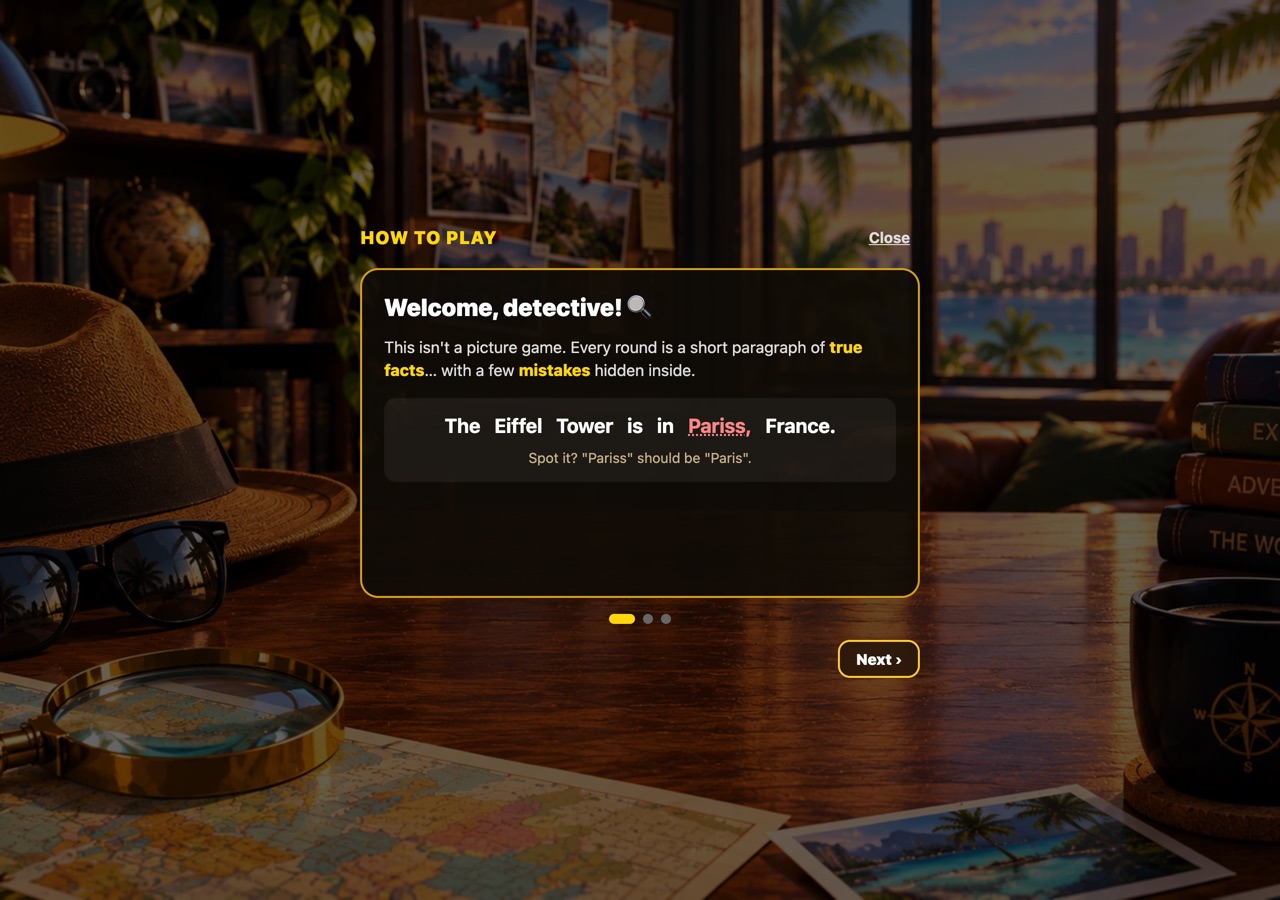
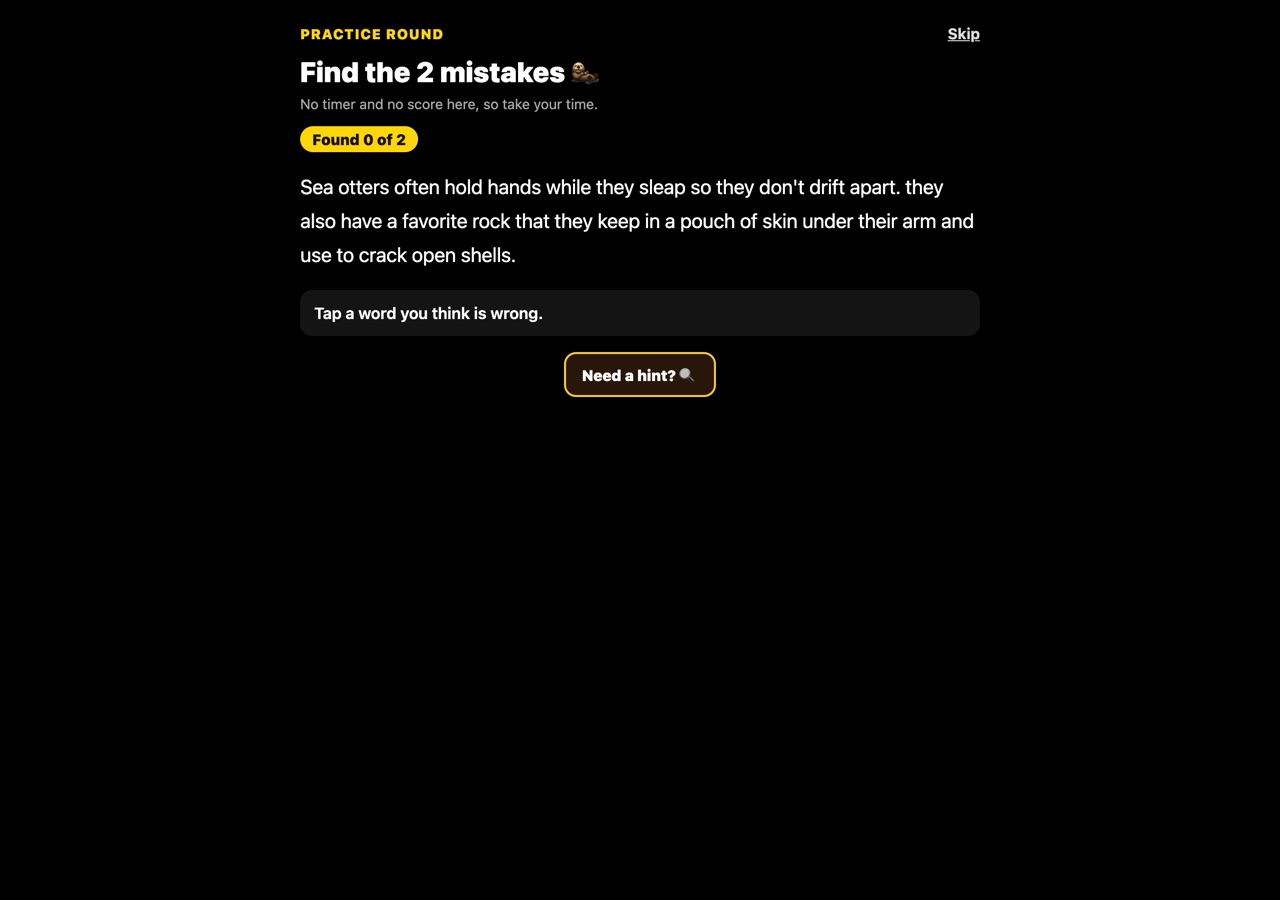
Every round is a short paragraph of true facts about a topic you pick, with a few factual, spelling, chronology and punctuation mistakes slipped in. You find them before time runs out.
No public links until launch: the repo is private and the playtest build is unlisted.
Why it exists
The game was a teammate's idea. They wanted something you could play to kill time that still leaves you a little sharper. You can play it on your own. Friendly competition is in now too: a season leaderboard ranked by stars.
What it looks like
My part
So far I've written the code for the current web version, working from the team's UX/UI design and QA testing. That has covered:
- the game screens in Expo and TypeScript
- Supabase for data, with database migrations and row-level security
- an Edge Function that takes a vetted true-fact paragraph, asks Anthropic's API which words to change, and checks the answer before the round starts
- adding request rate limiting
- deploying the web build to Vercel
- the leaderboard, the two Daily Prompts a day, the practice round and the How to play guide
- automating the prompt generator and a first-pass fact checker
What I've learned
React Native was new to me, so I worked through the code with Claude line by line, asking why something was written that way and changing what I didn't think was necessary or didn't agree with. Claude isn't perfect, and neither am I, but that back-and-forth helped me understand the code and make my own decisions.
On QuestKeeper, a personal project, I could decide halfway through coding that I didn't like something and just change it. Terrible idea sometimes, lol, but I definitely did it. Working with a team has taught me to slow down, make decisions together and give everyone room to do the work they specialize in.
What's been hard
Keeping the facts true. I automated the prompt generator and a fact checker, but I still re-check the already-checked prompts by hand, because a fact game with wrong facts is just a wrong game. It isn't hard, but the prompt bank keeps growing, so checking is a daily routine. If I miss a day, backup prompts are ready, because Daily Prompts matter to anyone chasing the leaderboard.
How the team works
We track work in GitHub and Jira, and a shared planning spreadsheet holds the roadmap, open questions and decision log.